
Marianne Straub – reflections on a talk by Mary Schoeser at the Art Workers’ Guild
Marianne Straub is a colossal figure in twentieth century British textiles. This might seem a qualified statement perhaps given her warm, modest and unassuming nature and her diminutive stature, but Straub’s importance in the British weave industry cannot be over-stated. And in Mary Schoeser – her archivist and biographer - we find a real champion for Straub. Schoeser’s knowledge of Straub’s career is encyclopedic and it was such a pleasure to hear her speak with such knowledge and passion about a subject of whom she was so fond and so familiar.
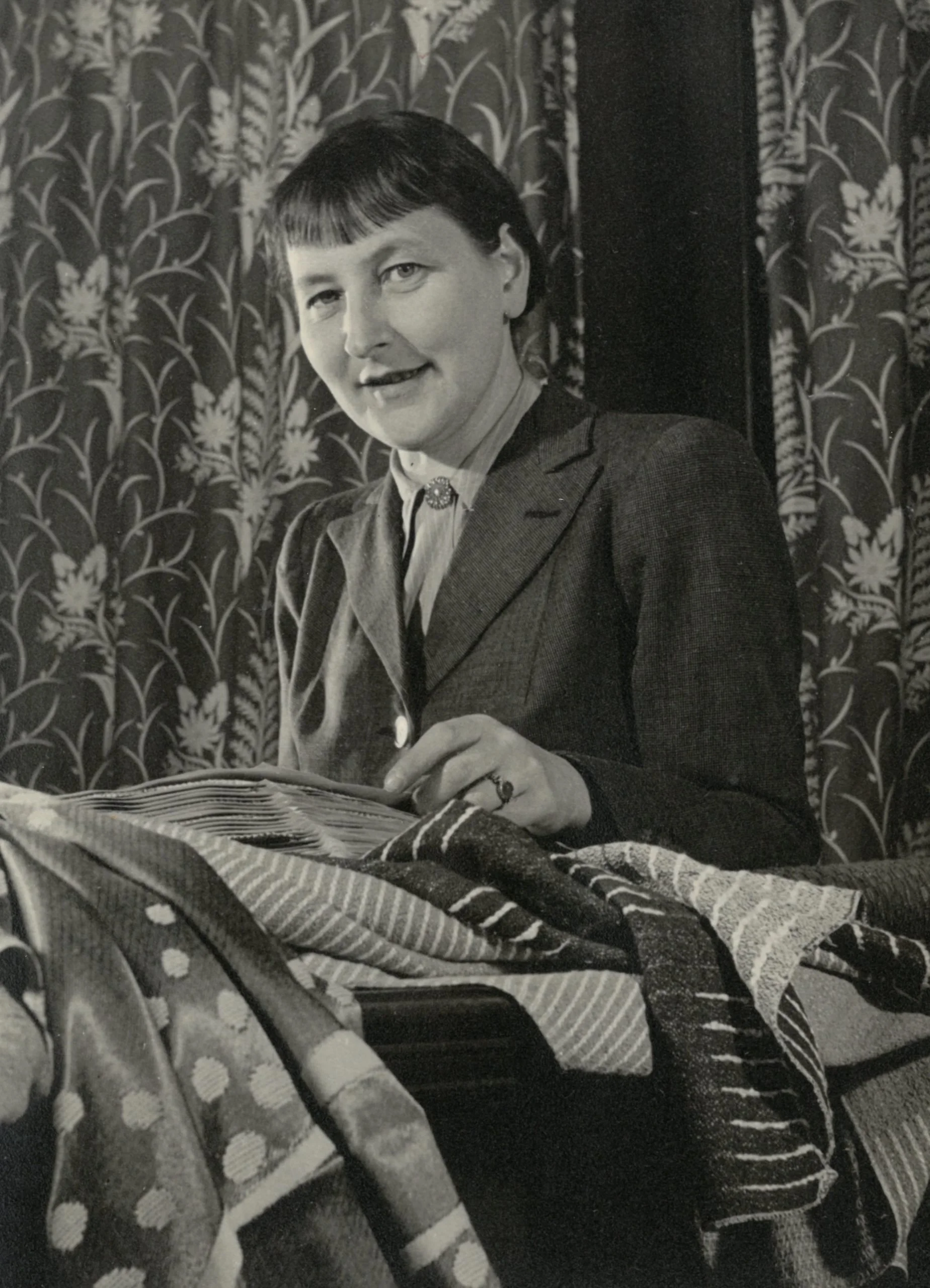
Marianne Straub was born in Switzerland, the second of four daughters of textile merchant Carl Straub and his wife Cécile Kappeler. She studied weave in Zurich under Heinz Otto Hürlimann before coming to Bradford Technical College. Swiss technical colleges at the time did not admit female students, and she was something of a pioneer at Bradford as only the third female student there. The course was rigorous and technical, and equipped students for industry.
After graduating from Bradford, a brief spell under the wing of Ethel Mairet introduced Straub to hand-spinning and natural dying, and honed her understanding of the inherent properties of different yarns and fibres – more tools in her already formidable design arsenal.
A timely introduction by Mairet led to a role as a consultant weaver for the Welsh Woollen mills where her industry career was launched. In 1937 Straub joined Helios, and within a decade rose to Managing Director. When Helios was bought by Warner and Sons in 1950, Straub took on the role of creative director there, and remained at the company until she retired in 1970. In 1972 she was made an RDI and in 1993 was awarded an OBE.
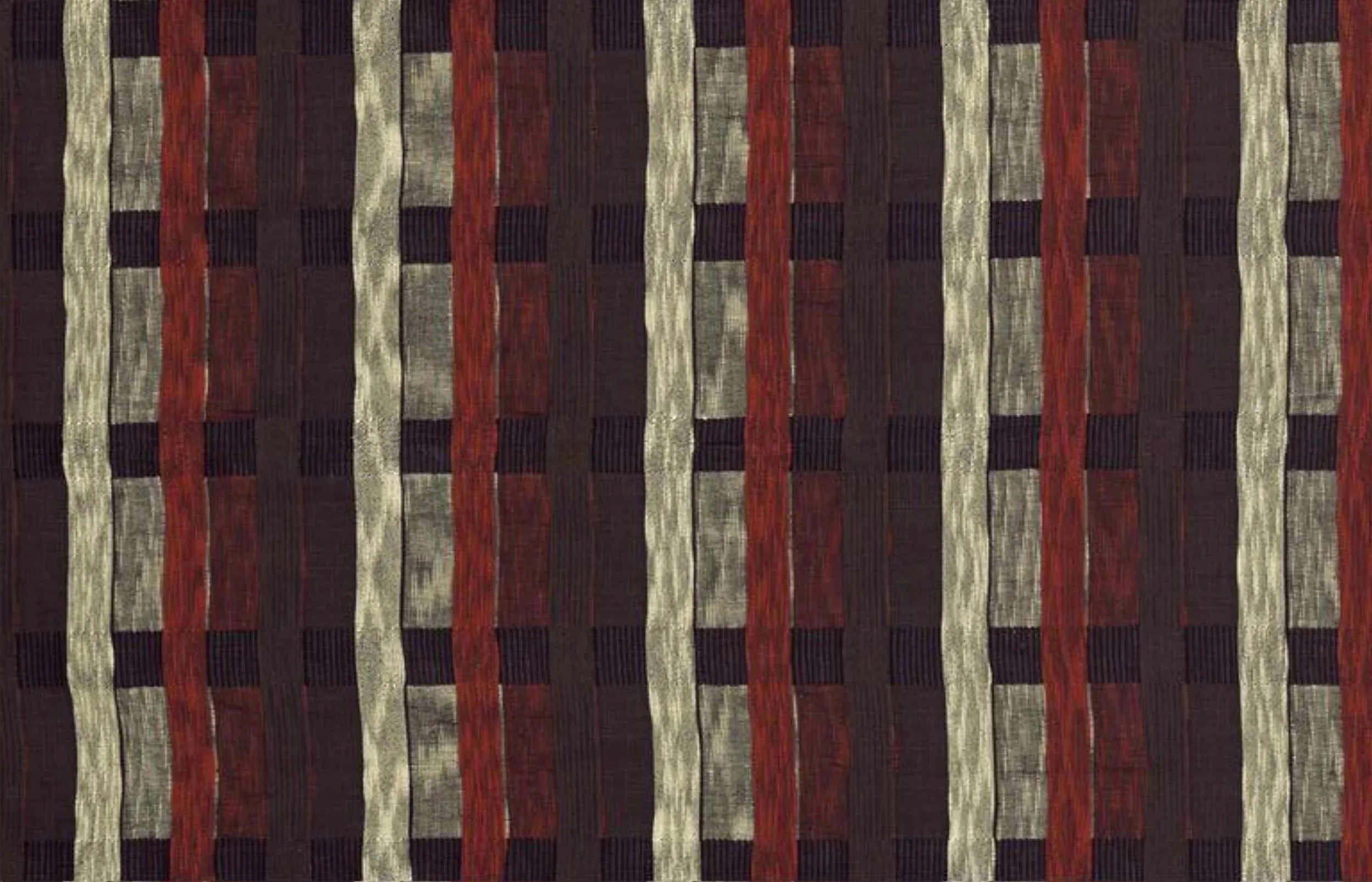
Straub clearly had a real affinity with weaving and cloth, creating fabrics with depth and texture. Her industrially woven fabrics never lost the tactile quality and charm of their hand-woven roots. Thinking always of the application, she exploited the properties of different yarns and weave structures to ensure the cloth was right for the purpose. Woolen yarns with their elastic qualities were used in upholstery to allow for cloths to curve smoothly over rounded shapes. Textured bouclé yarns were employed in leno structures to space out warp threads and create stable but sheer drapery fabrics. Yarns with the right elastic and acoustic properties were woven into cloth for radio speakers. Double sided fabrics allowed for unlined curtains.
Although her modesty might suggest otherwise, Straub clearly also had a good head for marketing. She personally oversaw the photo shoots at Warners, and knowing that most press images would be reproduced in black and white, Straub always ensured the fabrics were photographed to emphasize texture and surface.
Straub also had a keen understanding of the need for efficiency and economy in production. Much of the character of her designs was created in the warps of the cloth, allowing for simple wefts and fast efficient weaving – this not only made good business sense but also won her the praise and gratitude of the power loom weavers.
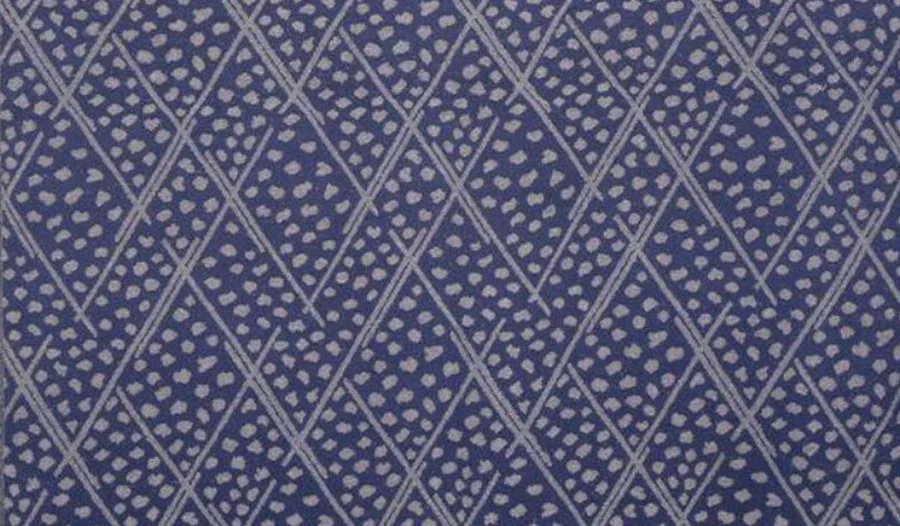
In the 1950’s Straub moved to Great Bardfield in Essex, joining the artistic community there which included Edward Bawden, John Adridge, Walter Hoyle and many more. She was clearly equally happy in artistic and industrial circles and played an important role in the life of the village. Teaching followed, at Central St Martins and the Royal College of Art. Her keen and critical eye, always tempered with generosity and warmth has had a huge impact on a generation of weavers.
Mary Schoeser paints a compelling picture of the energy and dynamism in the British Textile industry in the middle years of the Twentieth century, with towering figures such as Gordon Russell and Alec Hunter playing pivotal roles, and Straub herself at the quiet centre of things.
Her talk ended, though, on a poignant note – on asking Straub about her feelings upon receiving her OBE, Straub’s response shows that her first thought was always for the weavers and the mills, and her reply was
‘…yes, but the looms have stopped…’
Images from top
Marianne Straub - portrait
Marianne Straub - Aleppo Fabric (V&A museum)
Marianne Straub - fabric for Helios
For more about Marianne Straub please see my earlier posts here