Pattern Makers
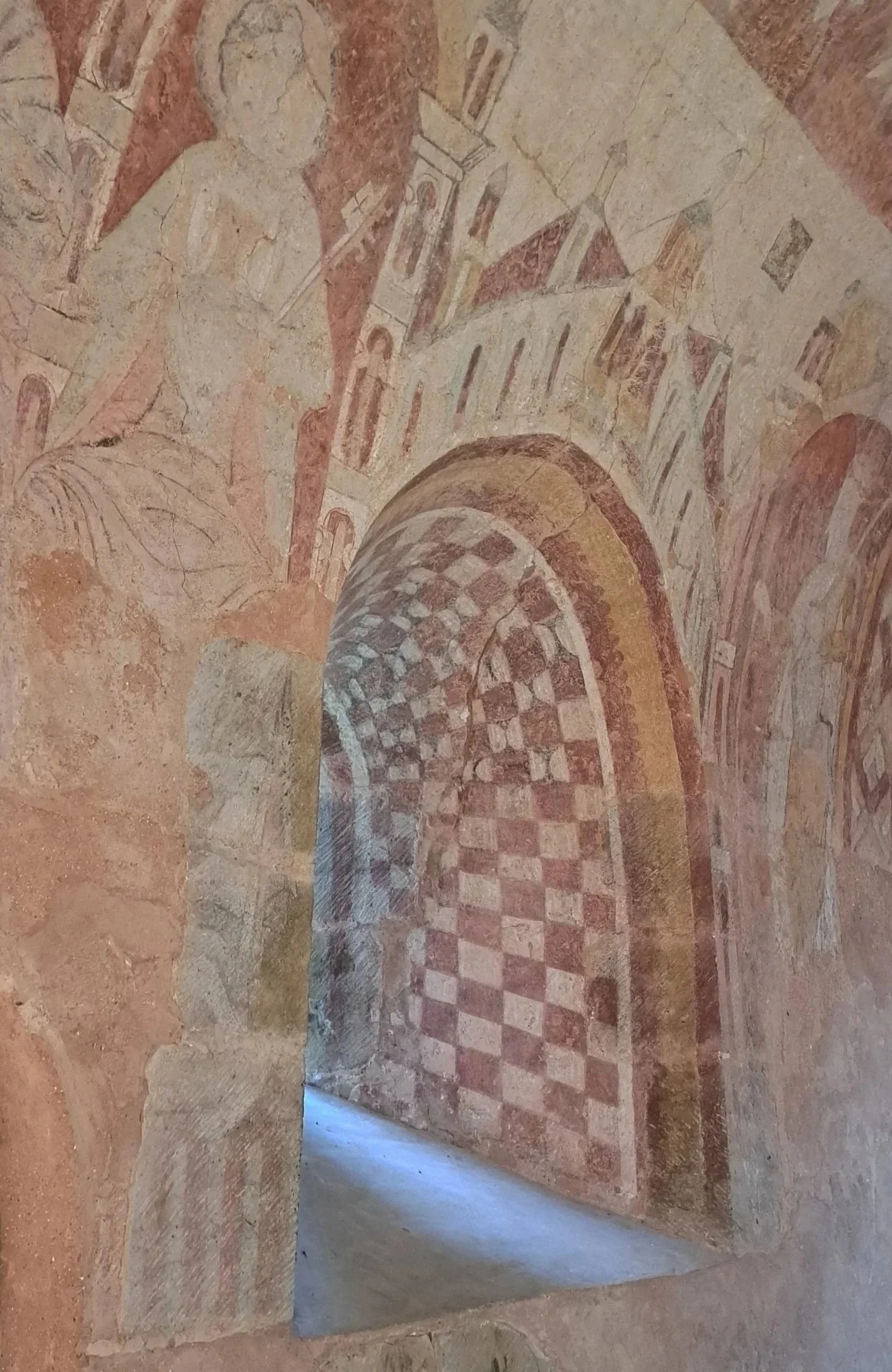
I have a great fondness for English Medieval wall paintings, and in particular for the playful geometric patterns which often appear in the margins - running around an arch, or bending playfully over architectural details.
In the images below you see the wonderful pattern-making in St Mary’s Kempley filing in the spaces around and between the figurative scenes.
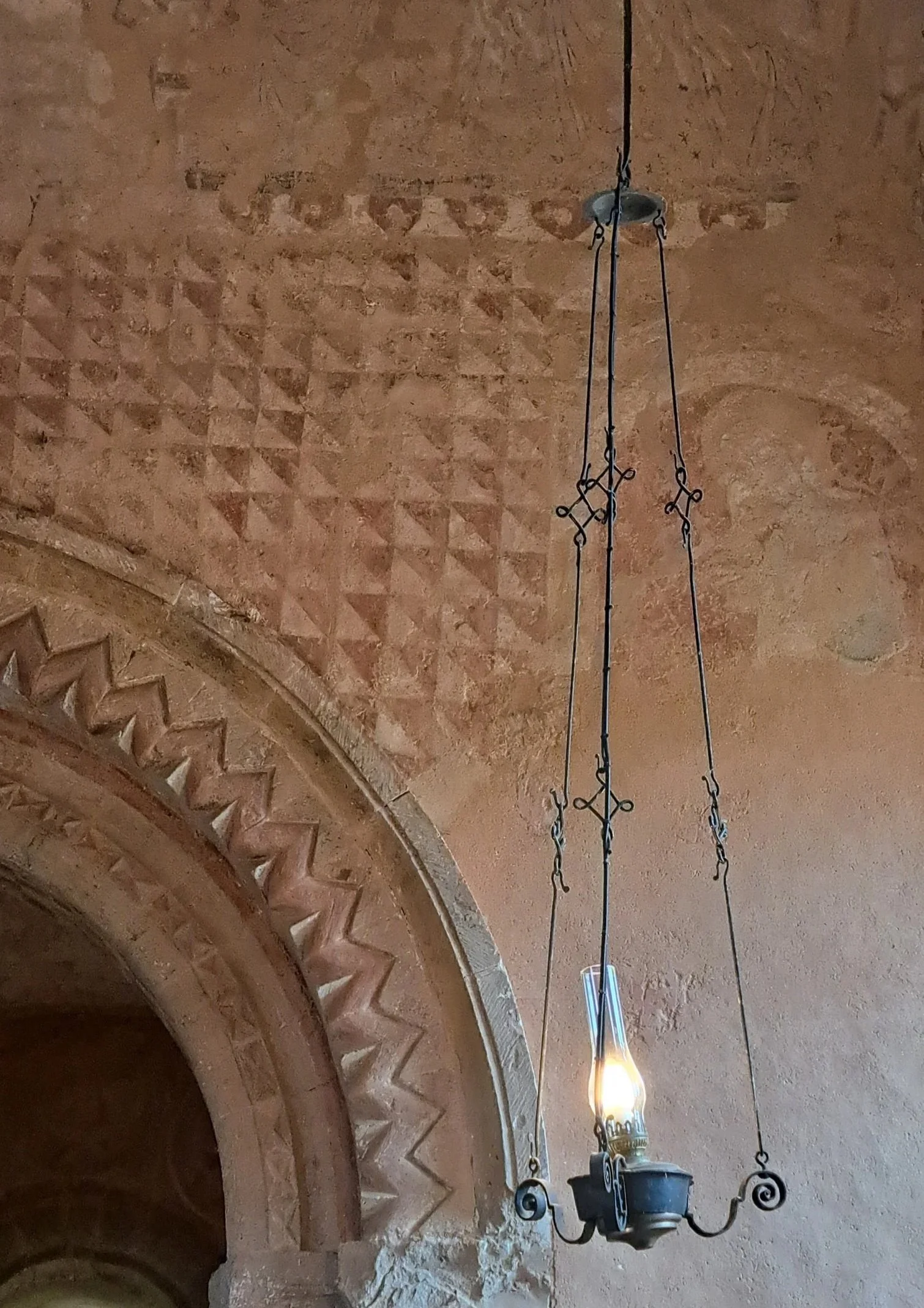
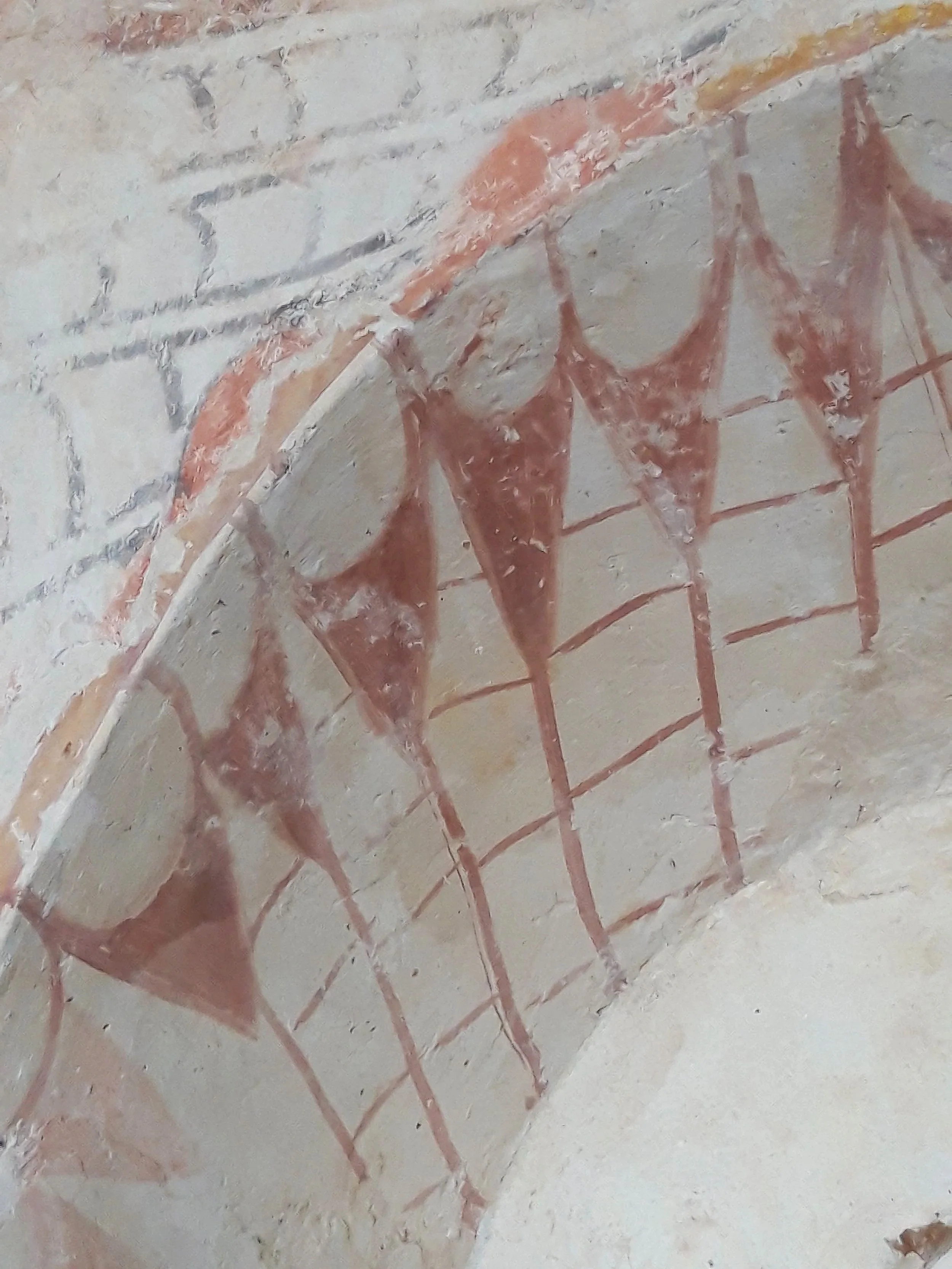
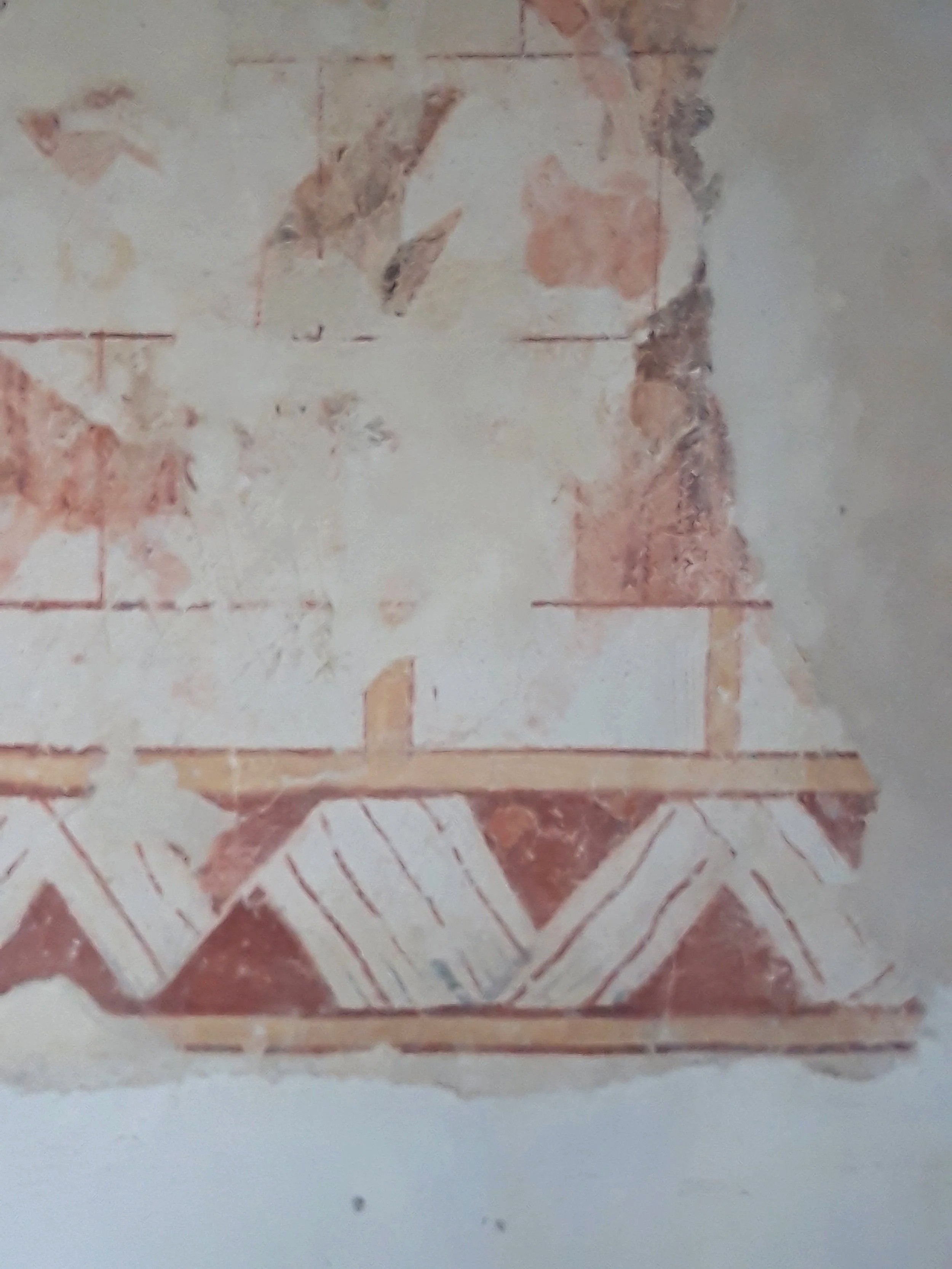
Below are a few details of pattern making from Capel Church near Tonbridge in Kent. Again, I love the way that the pattern bends and curves to accommodate the architecture.
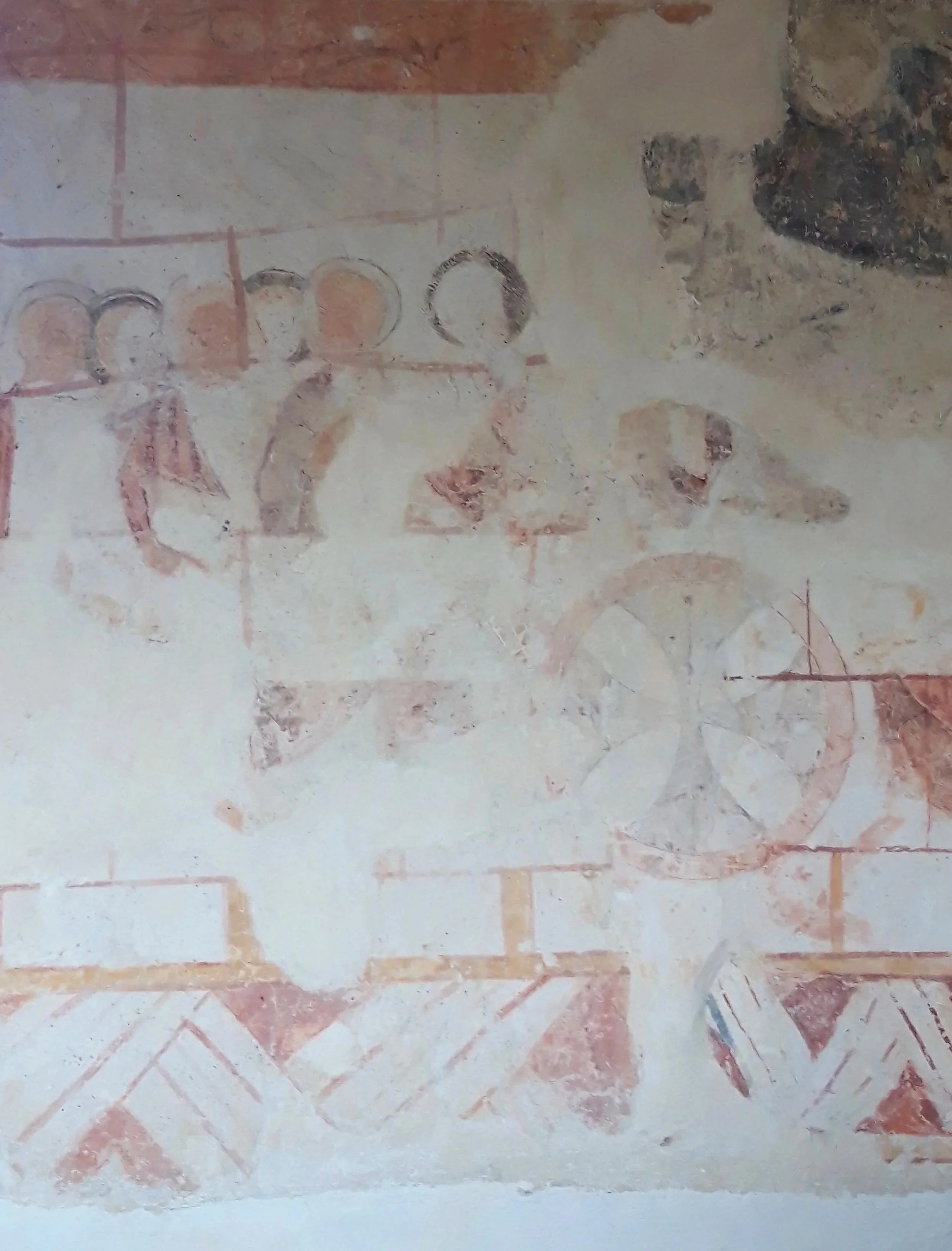
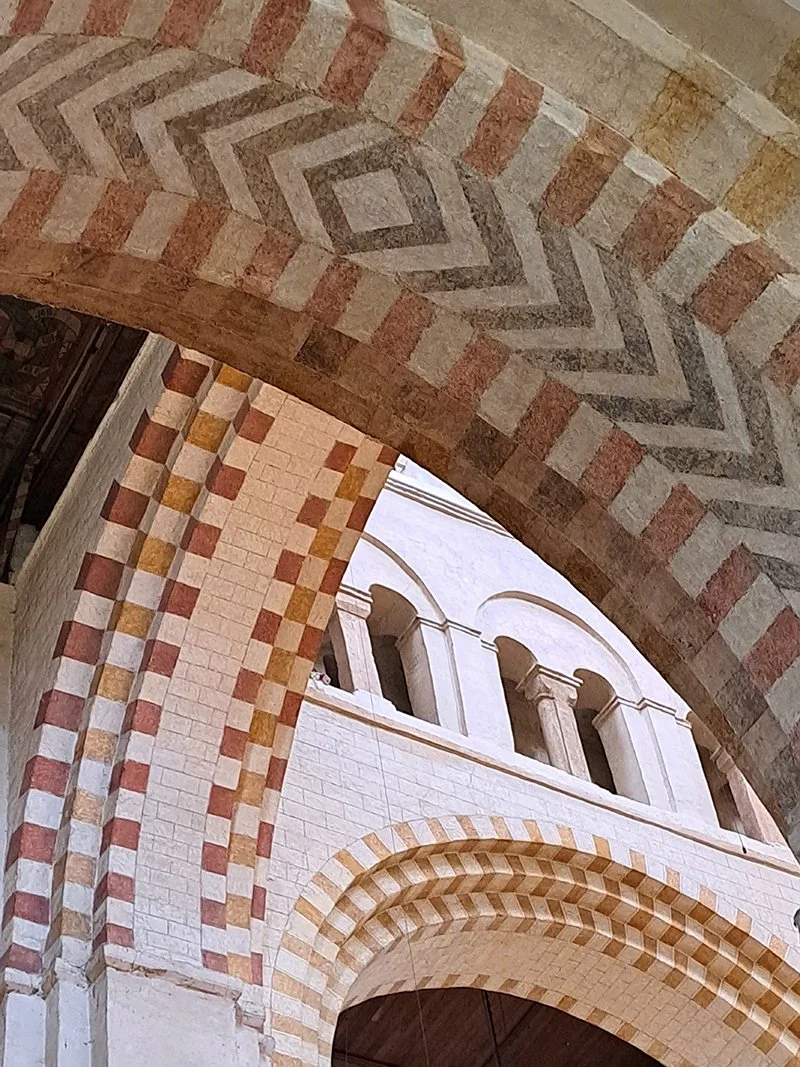
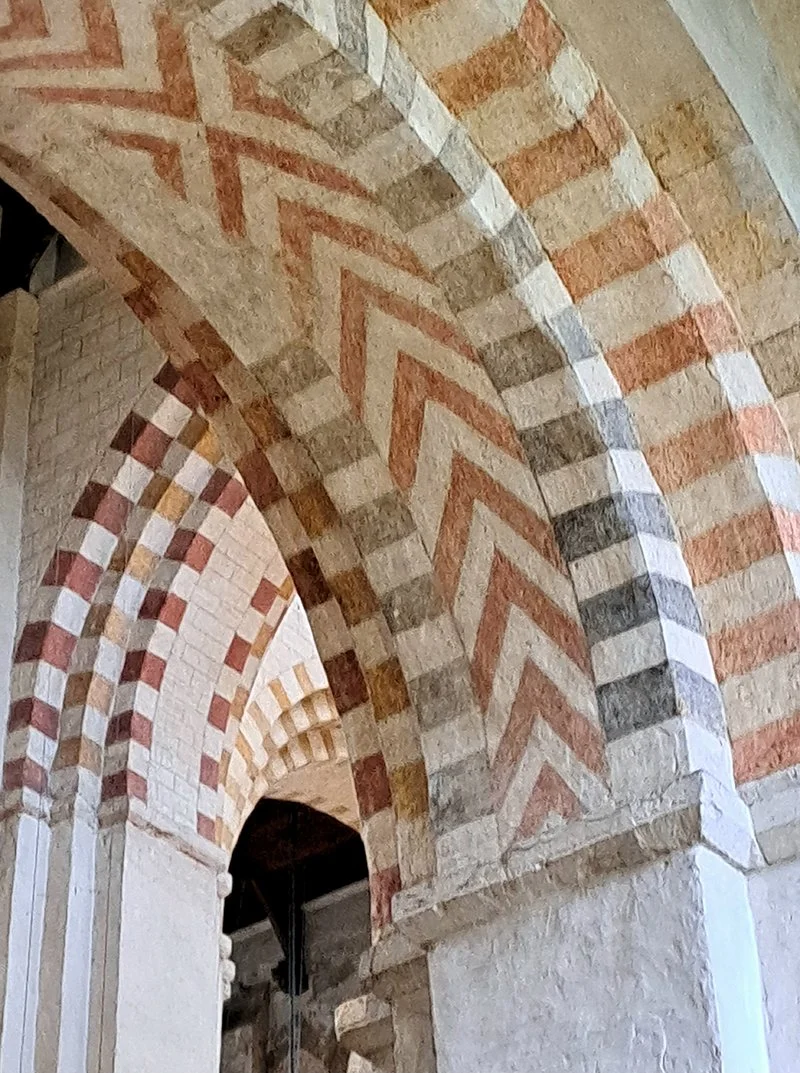
On a much grander scale, the images below are from the wonderful painted arches in St Alban’s cathedral and date from the early thirteenth century.
* * *
On a recent New Year’s trip to Ely Cathedral I came again across the wonderful thirteenth/ fourteenth century wall paintings in St Edmund’s Chapel. I had seen them many years ago, doing research for a commission for a set of hand-woven vestments for the Cathedral… but I had forgotten quite how wonderful they are.
Saint Edmund, also known as Edmund the Martyr, was king of East Anglia from about 855 until his death in 869. An account in the Anglo-Saxon Chronicle tells of his death at the hands of the Vikings and the ‘Great Heathen Army’. In the early tenth century his body was moved to Beodricesworth - now the market town of Bury St Edmunds.
Pictured below, in the top of the arch on one of the chapel side-walls is the scene from Saint Edmund’s martyrdom - he stands by a tree in the centre as arrows are fired at him from all sides. Below this scene is a large panel of stripes - rusty red on a pale ground. The stripes have a feathered edge, bringing a lively dynamic quality to the pattern.
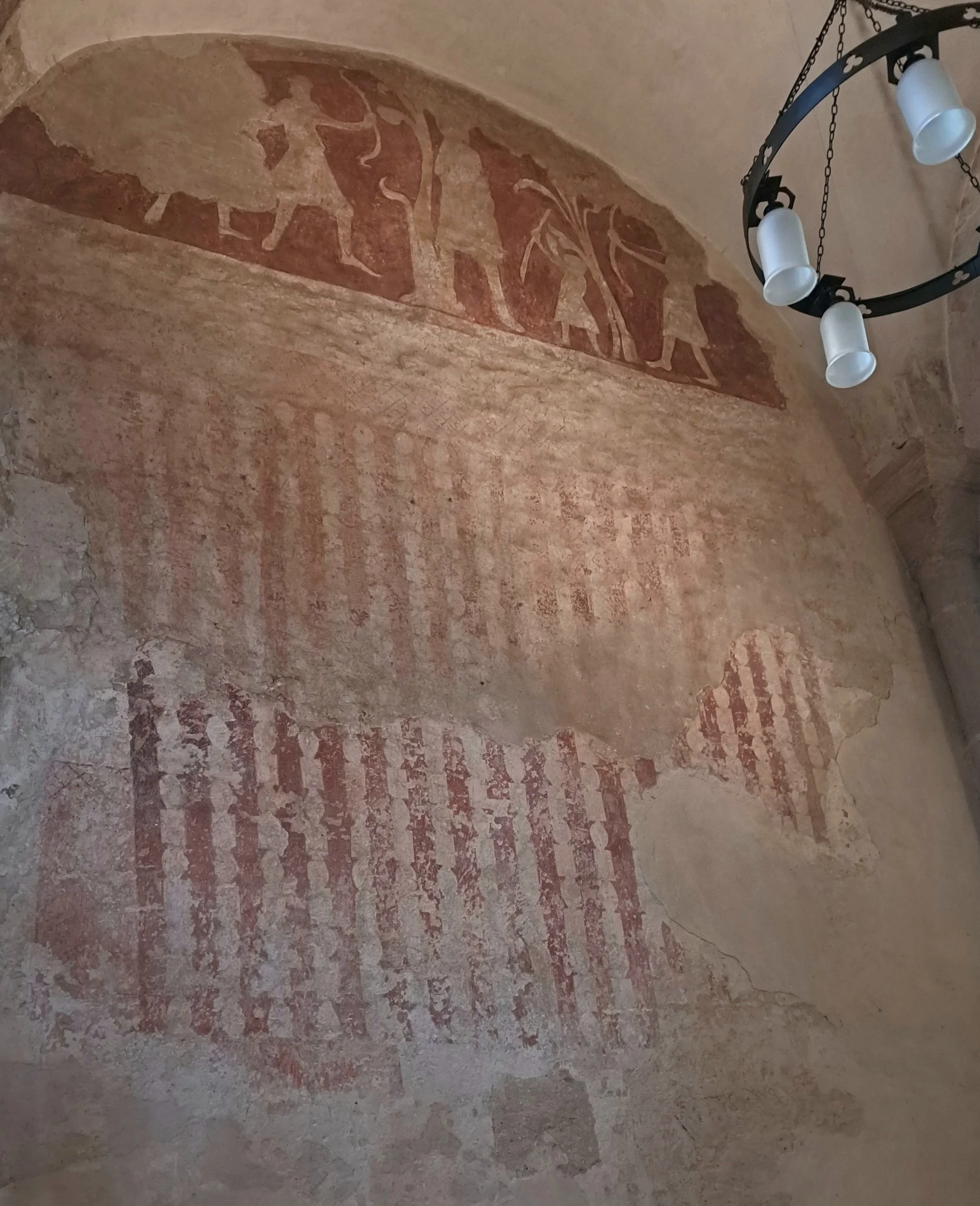
Below here, and facing the stripes, the other side wall of the chapel is painted with a startlingly modern pattern made up of repeated rings and circles of different sizes, arranged in a half-drop design. The circles are bordered on all four sides with wide bars of red. It is a wonderfully playful and confident piece of pattern-making, and feels at once ancient and very contemporary.
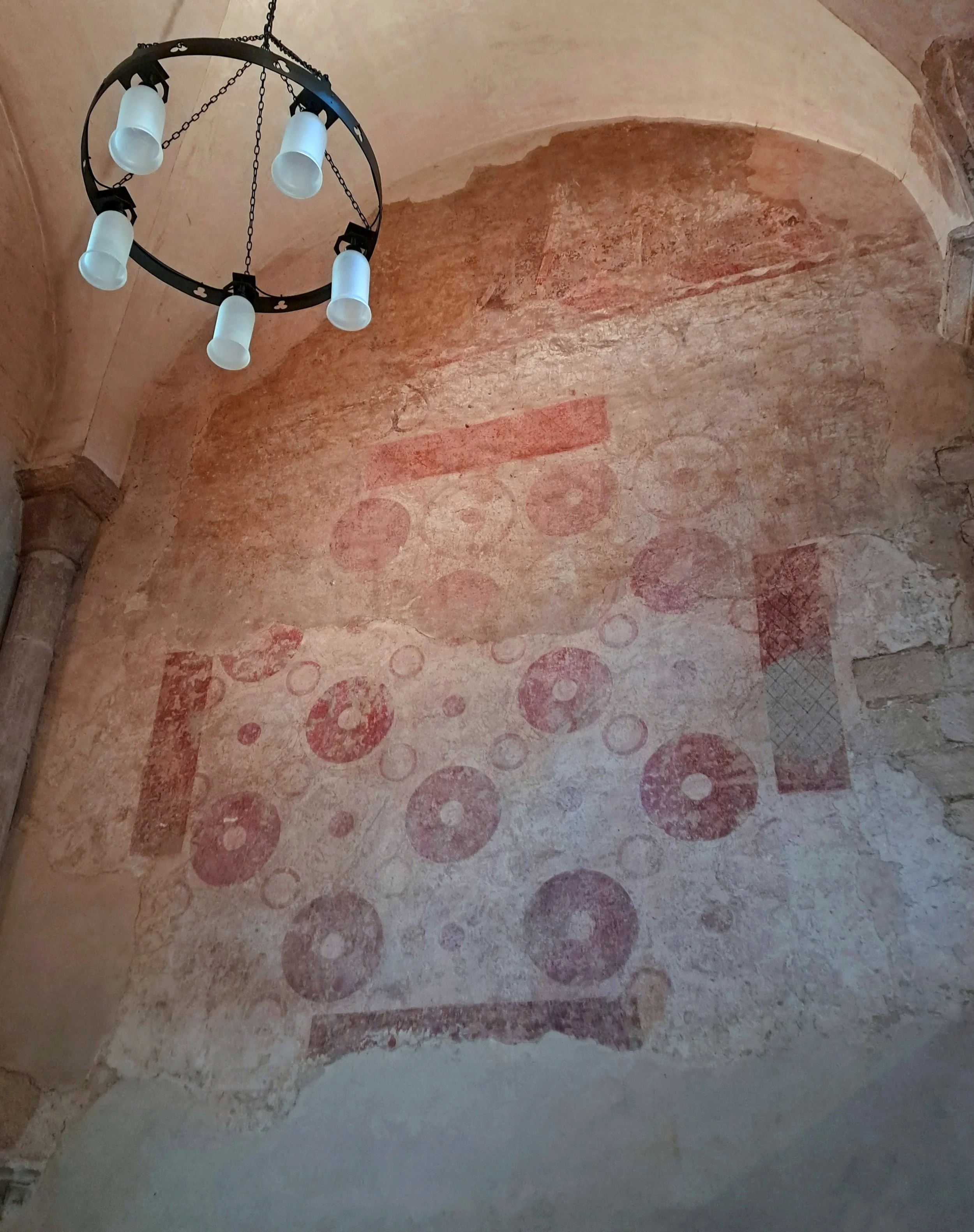
The paintings were made to mimic textile wall hangings - their decorative nature, large scale and confident execution suggest to me that they were the work of an experienced pattern-maker.
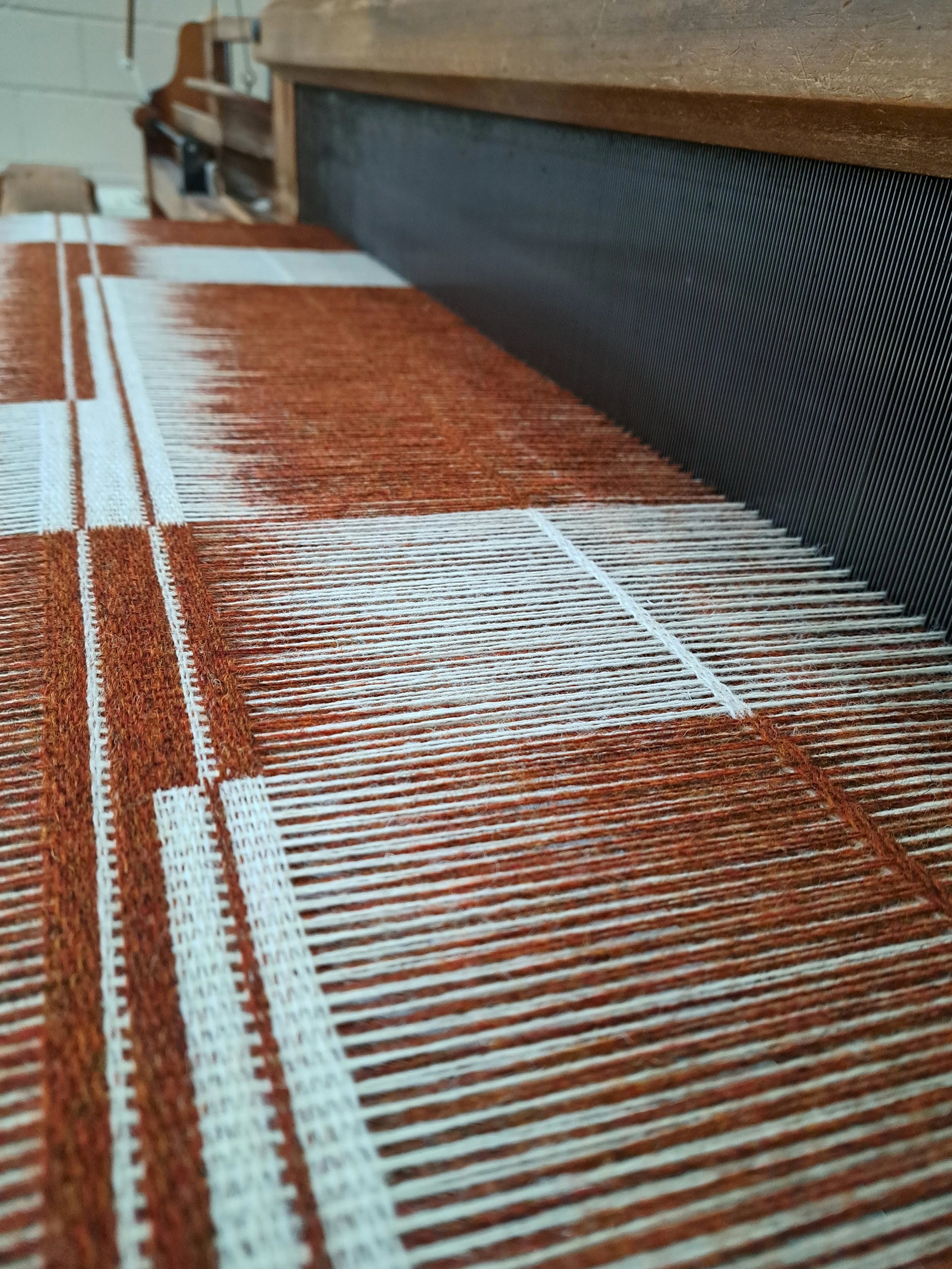
It is rare to find that patterns take centre-stage in this way, but in St Edmund’s Chapel they do so with a joyful exuberance that I hope to bring to my newest warp. And there is a satisfying completion of the circle in drawing inspiration for woven work from these wall paintings.